Fanatics
- 4 days Timeline
- 8 × 24 Assets delivered
- $50M Weekend revenue generated
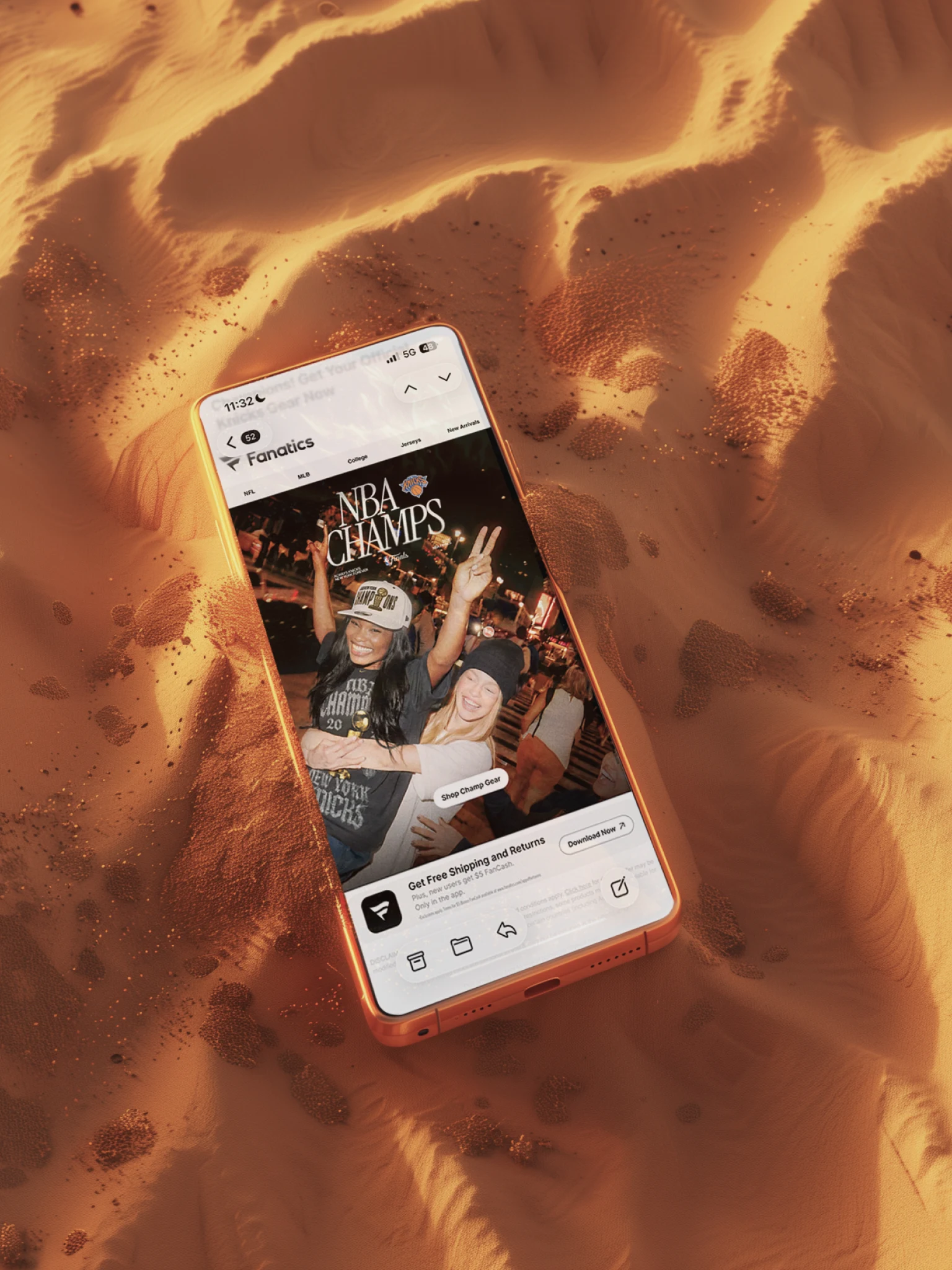
Fanatics operates at the speed of sport. When a championship series hits its final game, the window between the last buzzer and a fan's first purchase impulse is measured in seconds, this means a reactive campaign has to be fully built before anyone knows how the story ends. For the New York Knicks' 2026 NBA championship run, the brief arrived through DEPT with a four-day clock and a mandate to produce assets for a moment that could not be rehearsed, only prepared for.
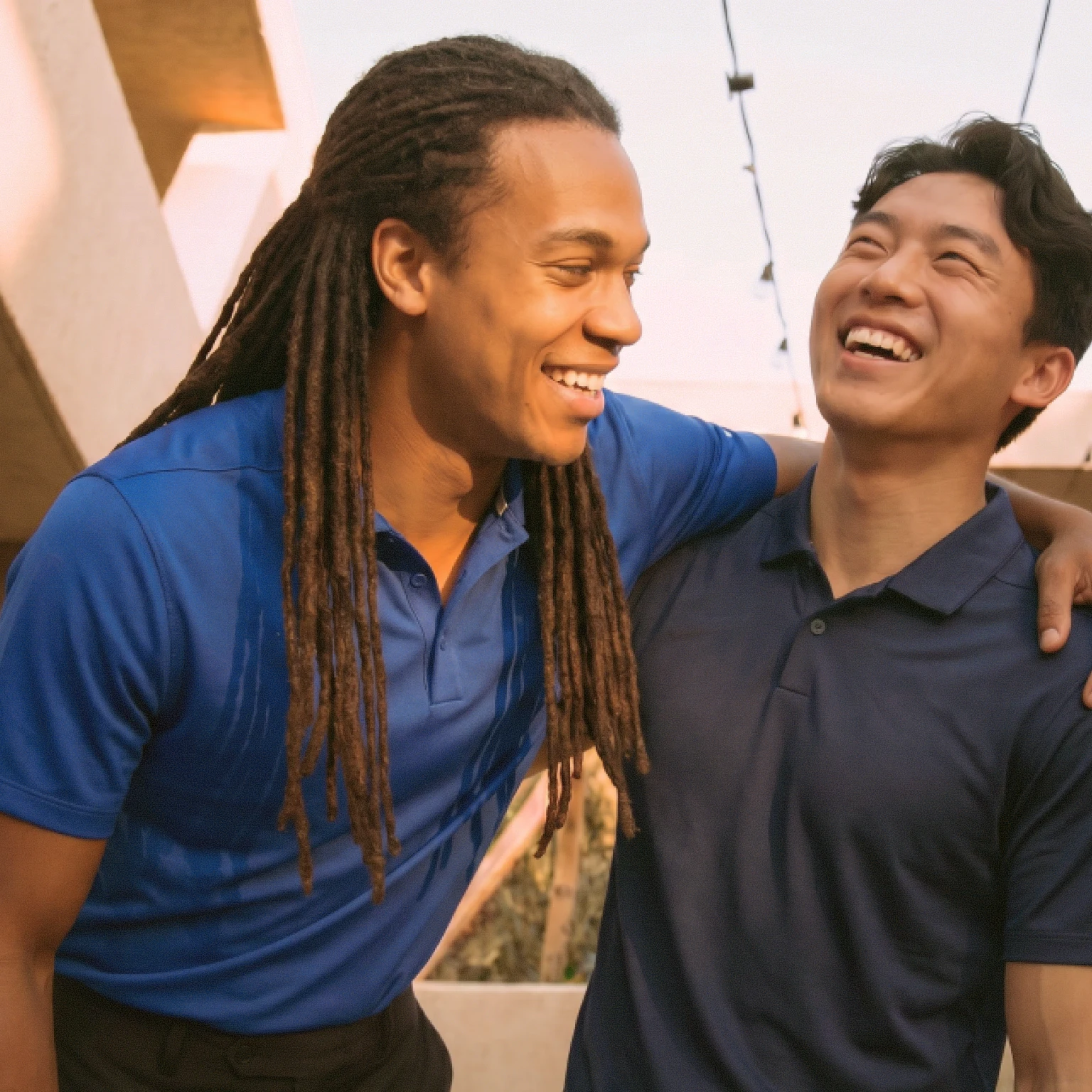
Two dads tailgating at the back of a pickup truck before a baseball game, rear gate down, casual and relaxed. Two young kids sitting in small folding camp chairs nearby, content and settled. The camera angle is low, shooting upward, with the midday sun behind the subjects creating a warm natural backlight. The dads are mid-conversation, laughing or smiling genuinely, candid, not posed. Cooler visible, maybe some snacks, a baseball glove or two in the background. No alcohol. No visible logos or branding on clothing. Shallow depth of field, the background softly out of focus. Feels like a real family moment, not a stock photo. Natural, warm, documentary-style photography.
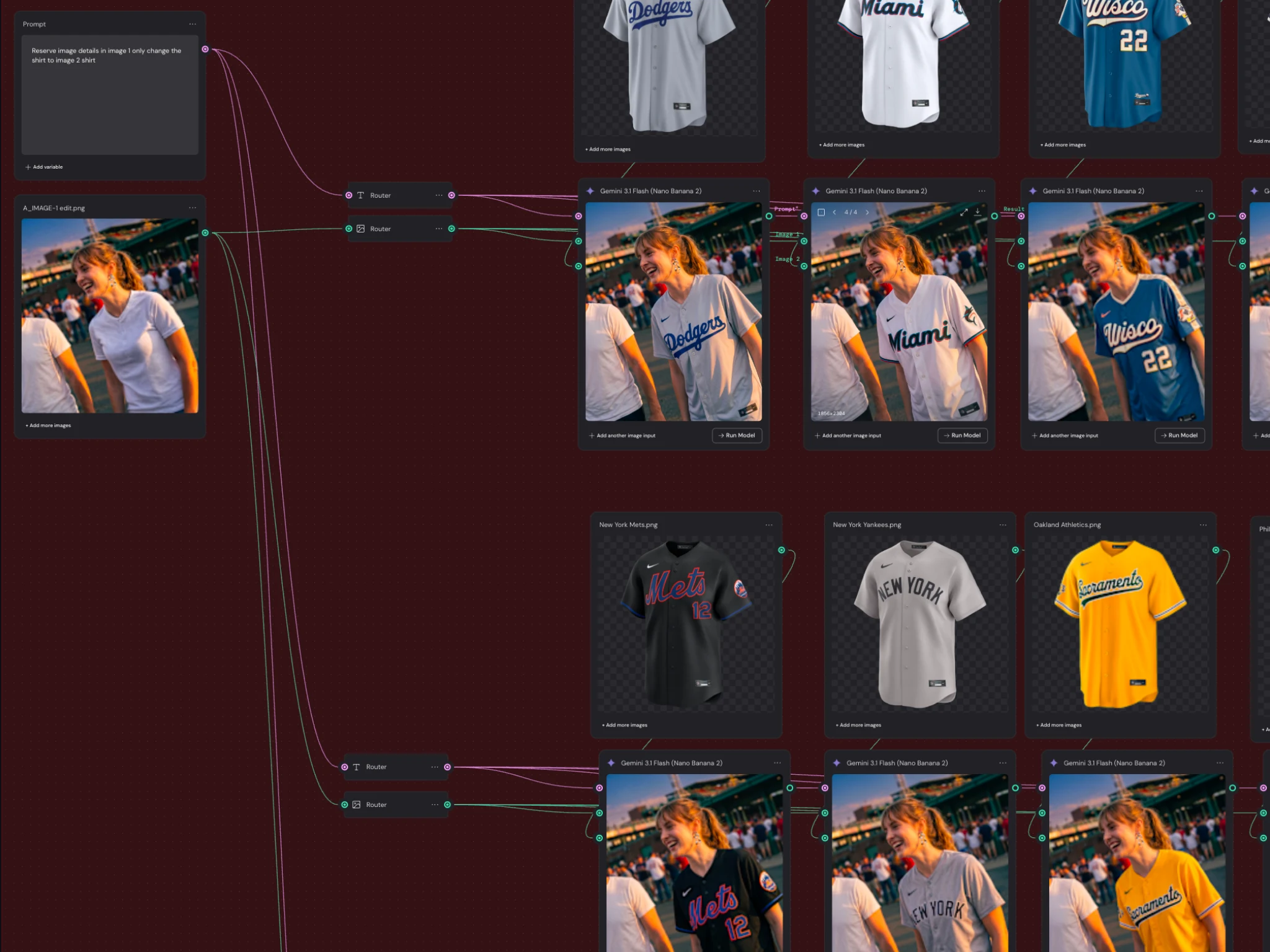
The creative decision that shaped everything else was AI-generated imagery, produced in Weavy, a node-based generation tool that gives more compositional control than most AI pipelines allow. We built eight hero images from the ground up, meant to carry the emotional weight of a city that had been waiting a long time for this.
Making AI imagery feel cinematic instead of generic comes down to specific, deliberate art direction: camera angle, light source, what's in the frame and what isn't. It's the difference between "two dads at a tailgate" and something that reads like a real family actually standing there.
The production ask was eight images, each rendered across email, landing page, and social, twenty-four final assets total, each with its own sizing, hierarchy, and platform behavior to account for. At four days, nothing could run sequentially. Decisions had to get made once and held to, since a hero image reading correctly in a 600px email column and in a full-bleed landing page header had to happen at the same time, which meant the quality bar got set at the start and didn't move.
Reactive design is a different discipline than project-based design. The constraint isn't creative, it's temporal, and the only way to meet it is to front-load every decision: what does this need to be before we know the outcome? That posture, designing for a moment you can't attend, is something I now carry into any project with a live or time-sensitive release. The quality bar gets set at the start or it doesn't get set at all.
Working entirely in AI-generated imagery also sharpened something about art direction more broadly: specificity is the skill. A good brief to a human illustrator and a good prompt to an AI tool require the same muscle, the ability to see the image before it exists and describe it precisely enough that someone or something else can make it. The tool changes. The clarity required doesn't.