eBay Design System
- 26+ Distinct Template Types
- 2 wk Recurring Sprint Cycle
- 3+ Verticals: Handbags, Watches, Sneakers
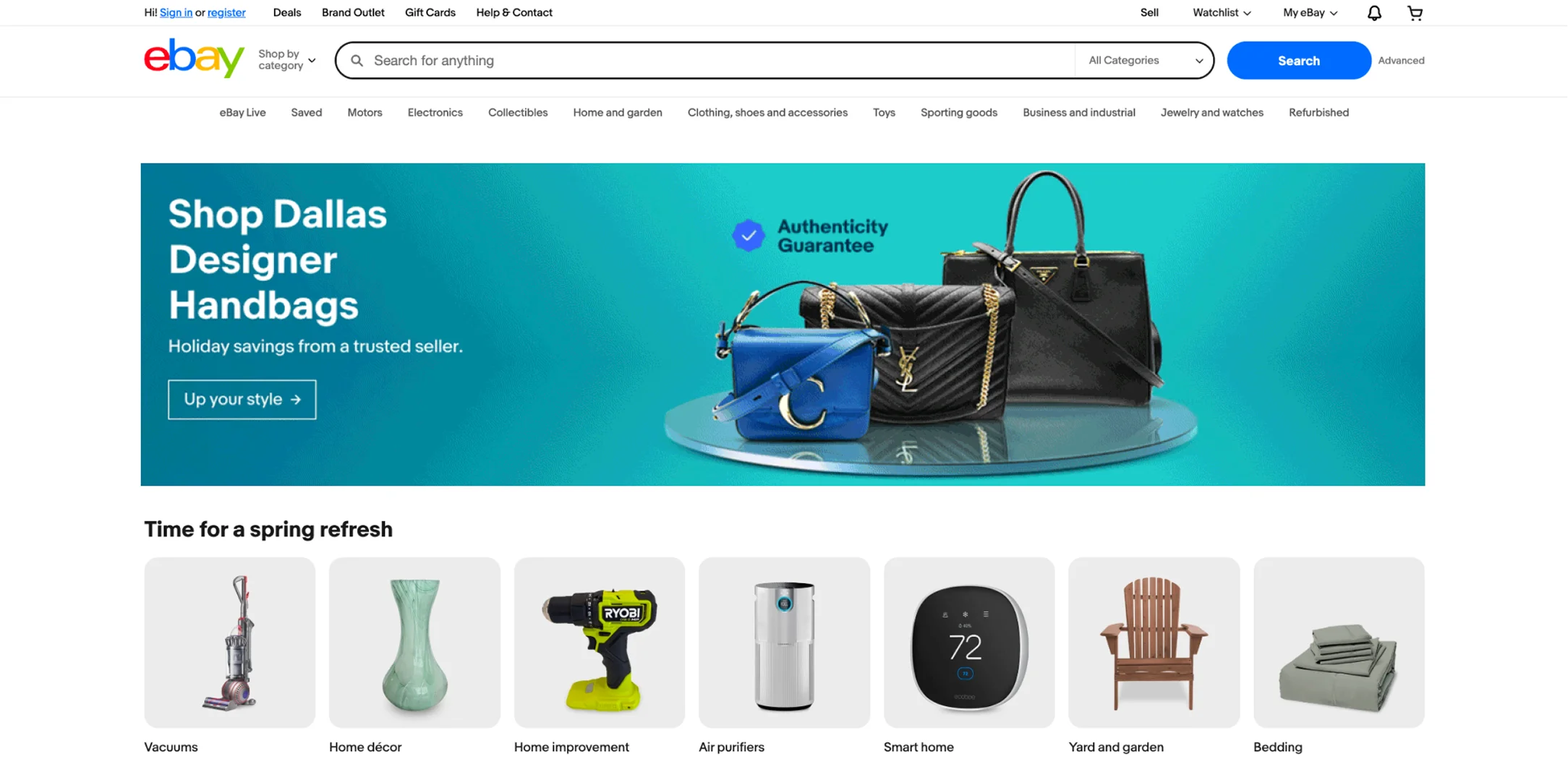
Embedded in the eBay North America account at FEED/DEPT, the work ran on a relentless two-week sprint cycle across major verticals — handbags, watches, sneakers, and beyond. The core responsibility, alongside my manager, was building and maintaining a template library that the entire design team relied on to produce campaigns at speed without reinventing the wheel every fortnight.
Building a template system for a team is a fundamentally different problem than designing for a single client. The templates had to be flexible enough to feel fresh across seasonal moments and product categories, while being structured enough that a junior designer picking one up for the first time could use it well. Every element had to earn its place — not just visually, but functionally. Does it render at 320px? Does the hierarchy hold when images are off? Is the CTA immediately obvious to someone scrolling fast on a phone?

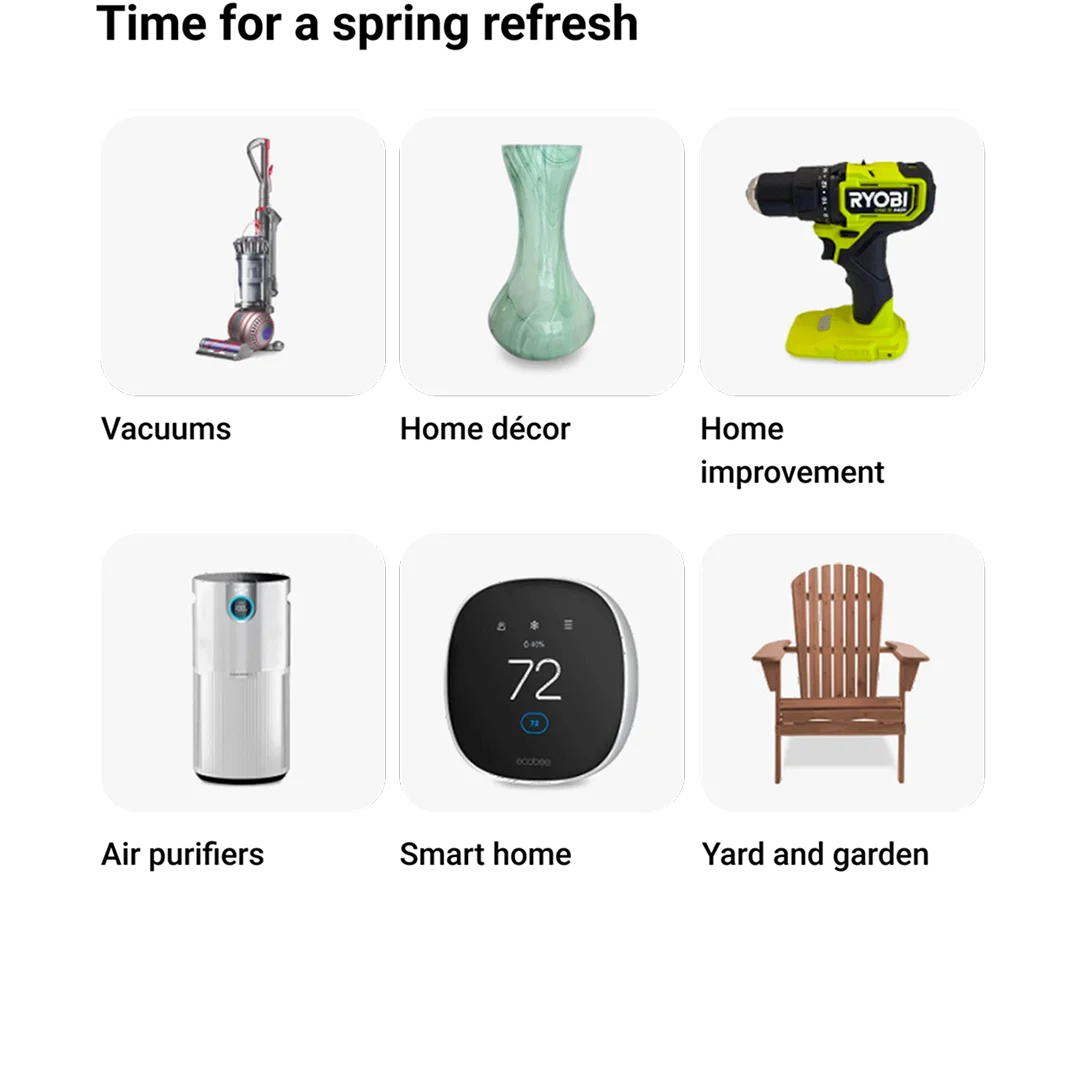
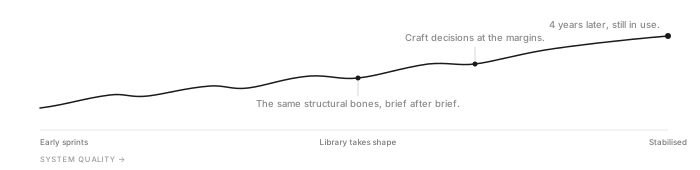
The template library didn't begin as a designed system — it grew sprint by sprint, each new brief revealing a gap, each edge case prompting a new template type, each production failure informing the next structural decision. That's how most real design systems actually mature: not from a top-down architecture exercise, but from accumulated contact with real problems.
The point where the system got genuinely tested was repetition. After enough sprint cycles, the templates were working, but the work was starting to feel like it — the same structural bones, the same visual logic, brief after brief. The question the system had to answer was whether a template could constrain and liberate at the same time, whether consistency and freshness were actually in tension or whether that was a false choice.
The answer came through craft decisions at the margins: close collaboration with copywriters to push information hierarchy further than the brief asked for, original iconography developed for seller-focused sections that gave dense content a visual shorthand, a cohesive blue winter holiday theme built across the Handbags and Watches series that felt like a campaign rather than a reuse. The templates weren't doing less — they were making room for the right things to be done well.
Design systems create speed without killing craft only if the people using them understand what the system is protecting and why. A template that a team uses without understanding is a constraint, and a template that a team understands is a starting point — the difference lives in how it's taught and maintained, not just how it's built.
The eBay templates still hold four years later, and that longevity isn't accidental. It's the result of building for edge cases from the start, designing for the person who will use the system rather than the ideal brief, and treating constraints like 320px rendering and images-off states as design inputs rather than technical footnotes.